QTC project record | Two-sided service portal
HiringHouseHelp employer and candidate portal development
Two audiences arrive with different goals: families want to find household help, while candidates want to find work. QTC Infotech developed HiringHouseHelp's website, with Laravel and related custom solutions forming part of the delivery.
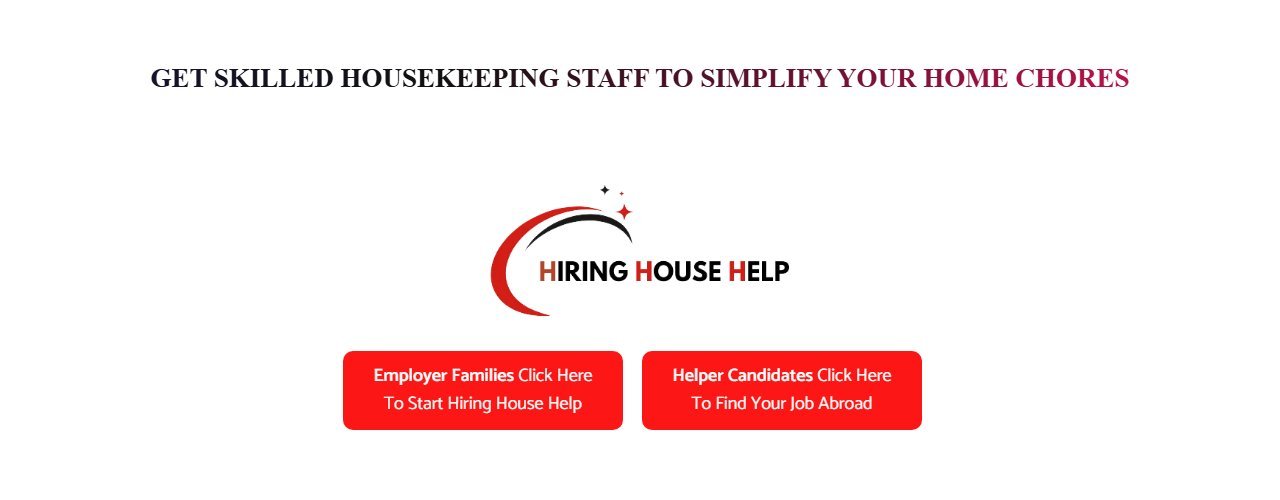
One portal, two distinct journeys
The public homepage gives employer families and helper candidates separate starting points. Its published guidance describes candidate discovery, job requirements and ways for the two sides to make contact. This is a different application problem from a brochure website with a single enquiry button.
For an employer, the relevant starting point is a service requirement. For a candidate, it is an opportunity. Keeping these entry paths distinct helps explain the service without asking both audiences to interpret the same generic call to action.
Employer-facing route
A dedicated entry for families looking for household help. The portal's public FAQ describes browsing candidates, posting a requirement and initiating contact. Those published routes establish the employer's purpose before any private account information is needed.
Candidate-facing route
A separate entry for people seeking work, alongside public job information. The case study documents this role separation; it does not reproduce candidate records or claim that a particular applicant was hired.
QTC's confirmed delivery
QTC confirms website development and Laravel-related custom solutions for HiringHouseHelp. The publicly visitable portal provides evidence of the customer-facing product and its distinct audiences.
This record does not assert a specific database design, automated matching algorithm, React implementation, payment integration or internal administration workflow. Those technical details require delivery documentation before they can be used as public project claims.
What a similar portal needs in its project brief
A useful discovery brief starts with roles, records and decisions. For a new portal, QTC would agree these requirements with the buyer before committing to a build:
- Roles and permissions. Define what a visitor, registered customer, service provider and staff member may see or change. Separate public discovery from private contact information.
- The core record. Specify the fields, ownership and lifecycle of a requirement or application, including how it is edited, withdrawn, reviewed and closed.
- Communication rules. Decide who initiates contact, which details are disclosed, and how notifications, preferences and failed deliveries are handled.
- Operational exceptions. Include duplicate records, incomplete information, unavailable providers and support requests in the acceptance checklist.
- Handover and maintenance. Agree source-code ownership, documentation, access handover, backup responsibilities and the support scope in writing.
These are planning questions for a future engagement, not a claim that every listed feature is present in this client project. Any recruitment, privacy or cross-border employment requirements need appropriate specialist review.
Discuss a custom portal with QTC
Share the two or three user roles, the main workflow and the systems that need to connect. QTC can help scope a custom Laravel web application, compare web application cost drivers, or plan an outsourced development engagement for an agency or business team.
Delivery confirmation comes from QTC; the public workflow is documented from the client's homepage and published FAQ. No hiring outcomes, revenue figures, security certifications or performance gains are claimed.
Maintained by QTC Infotech's delivery team. Project authorship and Laravel-related custom work confirmed by QTC on 5 September 2026.