Home › Blog › Manufacturing Website Design in Haryana
Industry guide · November 2026 · 11 min read
Manufacturing and industrial website design in Haryana: cost, must-have features and real examples (2026)
What a manufacturer, engineering firm, supplier or exporter website should do, what it costs to build and run in 2026, how it should work alongside IndiaMART and trade fairs, and the pages that actually bring RFQs and dealer enquiries, from an agency in Jind that has built manufacturing and industrial websites across Haryana and India.
Short answer: A manufacturing or industrial website in Haryana costs ₹15,000 – ₹40,000 for a company website with products, plant, certifications and an enquiry form; ₹30,000 – ₹90,000 for a product catalogue with 50 to 500 products, datasheets and request-for-quote; ₹60,000 – ₹1,50,000 for an export site in two or more languages; and ₹1,50,000 – ₹4,00,000 for a dealer or distributor portal with logins, price lists and orders. What makes an industrial website pay for itself is a catalogue that answers the buyer’s technical questions, proof that the plant is real, and an RFQ form that reaches a salesperson the same day. Below: the page list, costs, IndiaMART vs your own site, export pages, timelines, mistakes and real industrial websites we have built.
In this article
- What an industrial website is actually for
- Manufacturing website cost in Haryana by type
- The pages and features that bring RFQs
- IndiaMART, trade fairs and your own website
- Export and multilingual pages
- Examples: industrial websites we have built
- Timeline and what we need from you
- Mistakes that waste a manufacturer’s budget
- Turning the website into an enquiry channel
- How QTC builds industrial websites
- FAQ
What an industrial website is actually for
A purchase manager in Gurugram looking for a new bearing supplier, a distributor in Kenya searching for pump manufacturers in India, or a contractor shortlisting fabricators near Sonipat all do the same thing: search the product name, open three or four supplier websites and decide in a few minutes who gets the drawing or the RFQ. An industrial website has three jobs, in this order: get the enquiry (RFQ form, WhatsApp, call or email with a drawing attached), answer the technical questions that decide the shortlist (product range, specifications, materials, sizes, minimum order, lead time, certifications), and prove the company is real and capable (plant photos, machines, quality lab, capacity, years in business, clients and industries served). Haryana’s industrial clusters, from Panipat textiles and Faridabad and Manesar auto components to Yamunanagar plywood and Ambala scientific instruments, sell to buyers who check all three before they call.
Manufacturing website cost in Haryana by type (2026)
| Type of website | What is included | One-time build | Yearly running cost |
|---|---|---|---|
| Company website | 8–12 pages: about and plant, product categories, infrastructure and machines, quality and certifications, industries served, clients, careers, contact with RFQ form, WhatsApp and Google Maps | ₹15,000 – ₹40,000 | ₹3,000 – ₹8,000 |
| Product catalogue with RFQ | 50–500 products with specifications tables, filters by size or material, PDF datasheets and drawings, request-for-quote cart, enquiry routing to sales, product schema | ₹30,000 – ₹90,000 | ₹6,000 – ₹15,000 |
| Export-focused site | Catalogue plus English and one or two target languages, export markets and Incoterms page, country-specific contact routing, certifications for target markets, fast hosting for overseas visitors | ₹60,000 – ₹1,50,000 | ₹10,000 – ₹20,000 |
| Dealer / distributor portal | Dealer logins, dealer-specific price lists, stock status, order placement and history, scheme and circular downloads, admin approval, optional ERP or Tally sync | ₹1,50,000 – ₹4,00,000 | ₹15,000 – ₹50,000 |
Running cost covers hosting, domain and a care plan (updates, backups, product and datasheet changes). Photo or video shoots at the plant, translation and ERP licences are separate. GST at 18% is extra on agency fees unless stated. For a general comparison see the WordPress website cost guide; for portals see the custom web application cost guide.
Want a figure for your plant or product range?
Pick the page count and features (catalogue, RFQ, languages, dealer login) and get a budget range in 60 seconds.
The pages and features that bring RFQs
From the industrial websites we have built, these are the elements that correlate with serious enquiries rather than spam. Build them first; add the rest later.
- Product pages with real specifications. A table of sizes, grades, materials, tolerances, capacities or ratings for every product, not a photo and two lines. Engineers shortlist on specifications.
- Downloadable datasheets and drawings. PDF datasheets, catalogues and CAD or dimension drawings, optionally gated by email for large files. These are often the most-used pages on a B2B site.
- A request-for-quote form that accepts attachments. Product, quantity, delivery location, required date and a drawing upload, routed to the right salesperson with the product name attached.
- Plant and infrastructure page. Real photos of the shop floor, machines with make and capacity, testing and quality lab, warehouse and loading. Stock photos of foreign factories are the fastest way to lose a buyer’s trust.
- Certifications with numbers. ISO, BIS, CE or other certifications you actually hold, with certificate numbers and validity, plus GST and Udyam registration. Buyers and procurement teams check these.
- Industries and clients served. Which sectors use your products and, where permitted, client logos or case notes. A buyer from the auto sector wants to see auto customers.
- Minimum order, lead time and capacity. Stating them filters out enquiries you cannot serve and signals that the plant runs to a process.
- WhatsApp and call on every screen with the product name pre-filled, because many Indian buyers still prefer to talk before they send an RFQ.
- Search and filters on catalogues above 50 products, by category, size, material or application.
- Product schema and clean URLs so each product can rank for its own name and size in Google.
- Fast on a phone and on slow connections, including for overseas buyers; compress images and serve datasheets from fast hosting.
IndiaMART, trade fairs and your own website
Most Haryana manufacturers get their first online enquiries from IndiaMART, TradeIndia or similar marketplaces, and many should keep those listings. The marketplace is where buyers discover you; your own website is where they decide. A buyer who finds you on a marketplace sees competitors’ products on the same page, and almost always searches your company name before a large order. If that search shows a thin or outdated site, the enquiry goes elsewhere.
- Link every marketplace listing to your website and keep the company name, address and phone identical on both.
- Put the full catalogue on your own site, including the products the marketplace package does not let you list.
- Use the website at trade fairs. A QR code on the stall and the brochure that opens the relevant product category with a WhatsApp button collects contacts that would otherwise sit in a box of visiting cards.
- Track where enquiries come from (marketplace, website, Google Ads, trade fair) so you know which channel is worth renewing.
Export and multilingual pages
For exporters, the website is often the first and only thing an overseas buyer sees before a video call. Write the English pages for international buyers, not just for Indian search: units in metric and imperial where relevant, Incoterms you work with, ports you ship from, export markets served and the certifications those markets require. If you sell into non-English markets, translate the pages buyers use to shortlist suppliers (home, categories, key products, certifications, contact) and have them reviewed by a native speaker; machine translation alone reads poorly to buyers. Route enquiries by country to the person who handles that market, and reply in their time zone.
Examples: industrial websites we have built
A selection from our manufacturing and industrial portfolio. Open any project to see the live site and the scope we delivered.
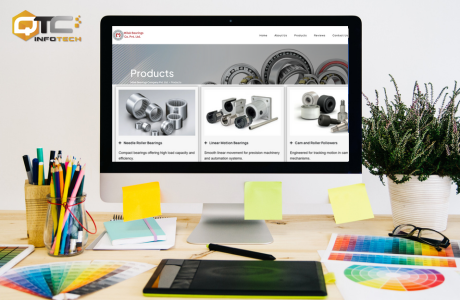
- Milak Bearings: product catalogue website for a bearings business, built on WordPress.
- Technomech Machine: product catalogue for an industrial machinery business.
- Tamboli Engineers: business website for an engineering company.
- Nidan Enviro Systems: business website for an environmental systems company.
- SKF Solar Pumps: business website for a solar pump business.
- Royal Sun Energy: business website for a solar energy company.
- Imperial The Super Fan: ecommerce store for a fan brand.
Timeline and what we need from you
A company website goes live in 3 to 4 weeks once we have product information and photos. A catalogue with hundreds of products and datasheets takes 5 to 8 weeks; a dealer portal 8 to 12 weeks. The delay is almost never the build; it is collecting accurate specifications from the plant. To start, you provide:
- Company profile, year of establishment, GST and Udyam numbers, certifications with certificate numbers
- Product list by category with specifications, in Excel if possible, plus existing catalogues and datasheets
- Photos of the plant, machines, quality lab and finished products, or a half-day for us to shoot them
- Industries, clients and export markets you can name
- Who receives enquiries for which product line or country
- One person who can approve content within 48 hours
Mistakes that waste a manufacturer’s budget
- A brochure site with no product detail. Five pages saying “quality products at competitive prices” do not rank and do not convince an engineer.
- The catalogue as one large PDF instead of product pages. Google cannot rank a 40 MB PDF for each product, and buyers on phones will not open it.
- Stock photos instead of the real plant. Buyers have seen the same images on ten other supplier sites.
- RFQs going to an inbox nobody checks. Route enquiries to a named salesperson and WhatsApp, and reply the same day.
- Relying only on a marketplace listing that you lose the day you stop paying.
- Hosting, domain or email in a vendor’s name. Insist on everything in the company’s name; see what to check before hiring a web designer in Haryana.
- Never updating the site. A product range from 2019 and an expired ISO certificate tell buyers the company has stopped caring.
Turning the website into an enquiry channel
An industrial website on its own waits for traffic. Four additions make it a channel:
- SEO for product names and applications. One page per product family, written for how buyers search (“stainless steel ball valve manufacturer”, “solar pump supplier in Haryana”, “industrial bearings dealer”), linked from the catalogue. Our SEO and content service handles this for manufacturers.
- Google Ads on high-intent product searches. Google Ads on product-plus-manufacturer and product-plus-supplier terms in the states or countries you sell to, landing on the product page with the RFQ form, and excluding retail and job searches.
- Enquiry routing and follow-up. Every RFQ, call and WhatsApp click tracked by source, pushed to a CRM or Google Sheet with the product attached, and a follow-up reminder for quotes not yet answered. Our CRM automation service sets this up.
- Google Business Profile for the plant, with the correct category, photos and products, because many buyers and visitors still find the factory on Maps.
How QTC builds industrial websites
QTC Infotech manufacturing and industrial website packages (2026)
Company website: ₹15,000 – ₹40,000 for an 8 to 12 page WordPress site with plant, products, certifications, industries served, RFQ form, WhatsApp routing and Google Maps
Product catalogue: ₹30,000 – ₹90,000 with specifications tables, filters, datasheet downloads, request-for-quote cart and product schema
Export site: ₹60,000 – ₹1,50,000 with multilingual pages, export markets, country-based enquiry routing and fast international hosting
Dealer portal: ₹1,50,000 – ₹4,00,000 with dealer logins, price lists, orders and optional ERP or Tally sync, built on Laravel or WooCommerce
Care plan: from ₹999 a month for updates, backups, security and product or datasheet changes on request
Every package includes mobile-first design, domain and hosting in the company’s name, call, WhatsApp and RFQ tracking, staff training and 30-day support. We work with manufacturers in Jind, Sonipat, Panipat, Rohtak, Hisar, Karnal, Ambala, Faridabad, Gurugram and across Haryana, with in-person visits to the plant where helpful. Get my fixed quote → See industrial projects →
FAQ
How much does a manufacturing company website cost in Haryana?
₹15,000 – ₹40,000 for a company website with 8 to 12 pages covering products, plant, certifications and an enquiry form; ₹30,000 – ₹90,000 for a product catalogue with 50 to 500 products, datasheets and request-for-quote; ₹60,000 – ₹1,50,000 for an export-focused site in two or more languages; and ₹1,50,000 – ₹4,00,000 for a dealer or distributor portal with logins, price lists and orders. Add ₹3,000 – ₹20,000 a year for hosting, domain and a care plan.
Is IndiaMART enough, or do we need our own website?
Keep IndiaMART if it brings orders, but do not rely on it alone. Buyers who find you there still search your company name before a large order, and the same listing shows competitors’ products beside yours. Your own website holds your full catalogue, certifications and plant photos, ranks for your product names, and sends enquiries only to you. Most manufacturers we work with run both and link the listing to the site.
Should we show prices on a B2B website?
Usually not for made-to-order or volume-priced products; show specifications, minimum order quantity, lead time and a request-for-quote button instead. Standard catalogue items with fixed prices can show a price or a price band. Dealer-specific pricing belongs behind a dealer login.
Do we need a multilingual website for export?
If you export to non-English markets, translate the pages buyers use to shortlist suppliers: home, product categories, key product pages, certifications and contact. English plus one or two target languages is enough for most exporters. Machine translation alone reads poorly to buyers, so have the main pages reviewed by a native speaker.
How long does it take to build a manufacturing website?
Three to four weeks for a company website once product information and photos are ready, five to eight weeks for a catalogue with hundreds of products and datasheets, and eight to twelve weeks for a dealer portal. Collecting accurate product specifications from the plant is the usual delay.
What should a manufacturer’s website show to win trust?
Real photos of the plant, machines and quality lab; certifications such as ISO, BIS or CE where you hold them, with certificate numbers; GST and Udyam registration; years in operation and installed capacity; industries and countries you supply; and a named contact for sales enquiries. Buyers check these before they send a drawing or a tender.